
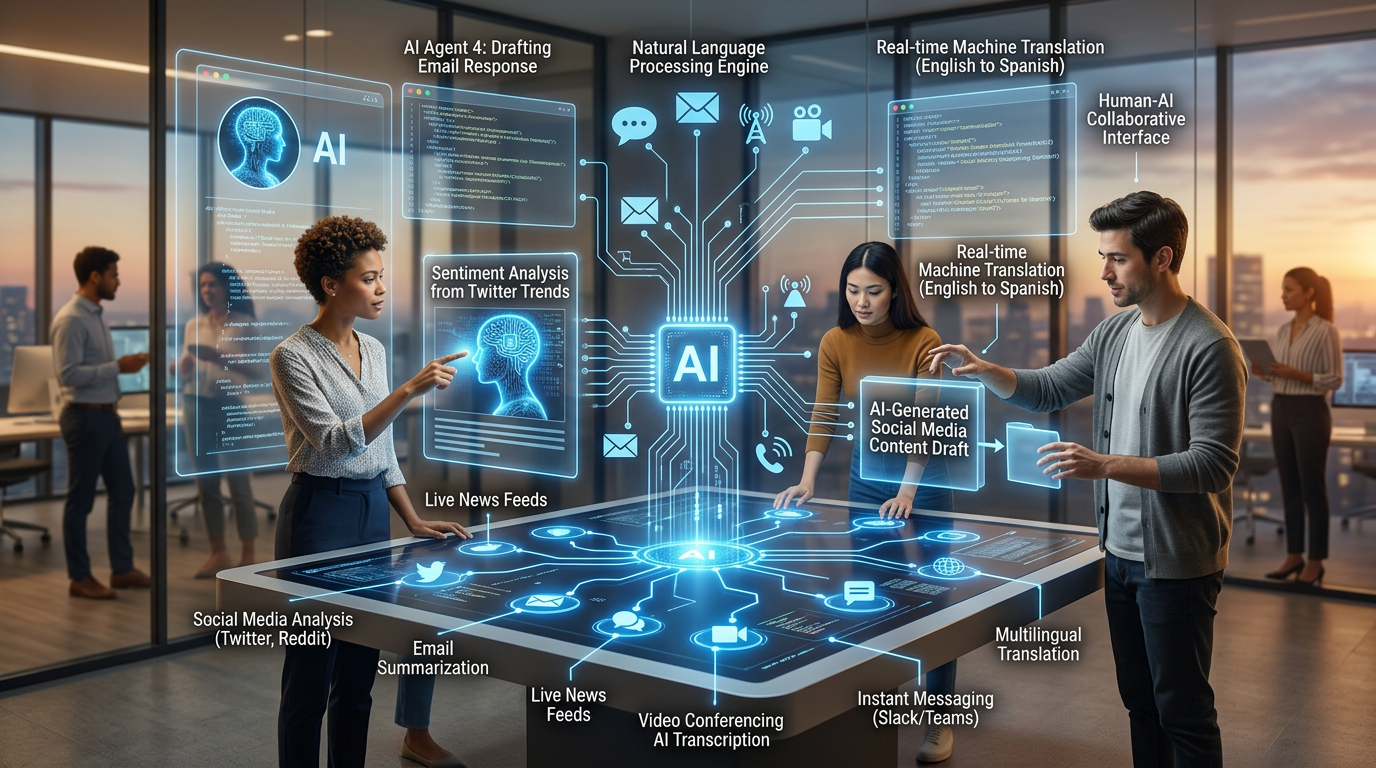
The benefits of AI depend less on technological evolution than on the use case. Artificial Intelligence (AI) is unfortunately being used today to blur the lines between facts, opinions, and (mis)information in digital communication.
AI-powered social media platforms inadvertently promote divisive content accelerating the spread of false information. Automated bots spread false narratives by artificially boosting engagement metrics and disseminating misleading content to specifically targeted profiles. Deepfakes are created through AI’s ability to superimpose visual and audio content in videos, contributing to the consumers’ challenges in distinguishing reality from fiction.
This said, Artificial Intelligence can also play a significant role in mitigating growing concerns over such misinformation and manipulation. Natural Language Processing (NLP) can be used to analyze news articles or social media posts to identify language patterns commonly associated with fake news. Sentiment analysis can evaluate the tone and language used in articles or social media posts to assess their reliability and trustworthiness. AI-powered fact-checking tools can validate claims by cross-referencing information with credible sources helping to debunk false claims by flagging inconsistencies or inaccuracies.
The future of Foundation Models lies in embodied agents that proactively act, explore, and self-improve. Generative AI technologies are part of the problem, while tensor methods are part of the solution. Generative AI has no direct connection to real-world knowledge or facts which in turn leads to “hallucinations” generating misleading or nonsensical information. Tensors are higher-order extensions of data matrices that can be used to encore multi-dimensional data to improve the accuracy and efficiency of deep learning models. Unlike traditional machine learning, the entries of a tensor operation change as coordinate systems evolve in such a way that the tensor still describes the same map in a new context.
Addressing the evolving nature of misinformation and safeguarding against malicious uses of AI requires interdisciplinary collaboration between technologists, policymakers, journalists, and the larger public to develop robust regulatory frameworks, ethical guidelines, and educational initiatives. Caltech’s Center for Science, Society, and Public Policy (CSSPP) fosters research and debate on issues at the nexus of science and society, aiming to both educate and influence science policy.
During this current academic year, the CSSPP is focusing on sustainability, AI ethics, and bioethics—in active collaboration with the Resnick Sustainability Institute, the Ronald and Maxine Linde Center for Global Environmental Science, the Center for Social Information Sciences (CSIS), and the Merkin Institute for Translational Research.
Several challenges remain that are limiting the effectiveness of such initiatives in combating misinformation. One inevitable challenge is the advancement of technology, which allows purveyors of misinformation to adapt their tactics to evade detection. The cat-and-mouse game between developers of misinformation and AI-based detection systems necessitates continuous updates and improvements to AI algorithms.
Biases inherent in AI algorithms, whether in data selection or model training, must be addressed to prevent unintentional amplification or suppression of certain perspectives and currents of thought.
Finally, specifying and integrating contextual variables to capture changing views on what constitutes the facts, if not truth, will be crucial to maintaining credibility and trust in how and where AI models will be applied in the future.
Simplified technical information on the tensor concept
Tensors are higher-order extensions of matrices. While matrix methods form the cornerstone of traditional machine learning and data analysis, tensor methods have been gaining increasing traction by encoding multi-dimensional data represent and compute on high-dimensional data efficiently.
Unlike a matrix, it shows an object placed in a specific coordinate system. When the coordinate systems change, the entries of a tensor also transform in that way, such that the tensor still describes the same map in the new coordinate system.
Enjoy reading!
Article 1:
A review of the theoretical foundations of financial well-being
The authors seek to elucidate the conceptualization of financial well-being and propose a theoretical framework for its understanding by examining and synthesizing its theoretical foundations.
Despite its primarily individual focus, comprehending financial well-being necessitates contextualization within broader societal dimensions, given its profound societal implications and its intrinsic connection to socio-economic advancement and subjective well-being.
Employing a qualitative-descriptive approach informed by empirical research and the insights of various scholars and institutions, this study seeks to consolidate the definition of financial well-being while concurrently exploring and comparing its diverse theoretical underpinnings.
Source:
García-Mata, O., Zerón-Félix, M.
Int Rev Econ 69, 145–176 (2022)
Article 2:
MineDojo, an open framework created by Anima AI + Science Lab
The future of Foundation Models lies in embodied agents that proactively act, explore, and self-improve. MineDojo is an open framework designed to help the community develop these generally capable agents, featuring a simulator suite based on Minecraft and a massive internet database including YouTube, Wiki, and Reddit. This framework employs a promising foundation model recipe for agents.
Three main ingredients are essential for generalist agents:
- An open-ended environment allowing unlimited tasks and goals, exemplified by Earth;
- A large-scale knowledge base that teaches both the ‘how’ and ‘what’ of useful actions, extending beyond text to include rich multimedia data;
- And a suitable platform like Minecraft. Minecraft’s infinite voxel world, devoid of specific scores or fixed storylines, serves as an ideal open-ended AI playground.
Addressing the evolving nature of misinformation and safeguarding against malicious uses of AI requires concerted efforts from diverse stakeholders.
Established in 2023, the Caltech Center for Science, Society, and Public Policy (CSSPP) fosters research and debate on issues at the nexus of science and society, aiming to both educate about and influence science policy.
In the current academic year, the CSSPP is focusing on sustainability, AI ethics, and bioethics—in active collaboration with institutes like the Resnick Sustainability Institute, the Ronald and Maxine Linde Center for Global Environmental Science, the Center for Social Information Sciences (CSIS), and the Merkin Institute for Translational Research.
Established in 2023, the Caltech Center for Science, Society, and Public Policy (CSSPP) fosters research and debate on issues at the nexus of science and society, aiming to both educate about and influence science policy by leveraging Caltech’s expertise.
In the 2023–2024 academic year, the Center will focus on climate change and sustainability, AI ethics, and bioethics—areas where Caltech already has significant research strengths and active collaborations through institutes like the Resnick Sustainability Institute, the Ronald and Maxine Linde Center for Global Environmental Science, the Center for Social Information Sciences (CSIS), and the Merkin Institute for Translational Research.
Several challenges today limit the effectiveness of Ai in combating misinformation. One inevitable challenge is the advancement of technology, which allows purveyors of misinformation to adapt their tactics to evade detection.
Additionally, ensuring the transparency and accountability of AI-driven misinformation detection systems is crucial to maintaining trust and credibility. Biases inherent in AI algorithms, whether in data selection or model training, must be addressed to prevent unintentional amplification or suppression of certain perspectives.
Moreover, the cat-and-mouse game between developers of misinformation and AI-based detection systems necessitates continuous updates and improvements to AI algorithms – context need to adapt to changing views on what constitutes facts, if not truth.
Another challenge is the potential for AI to be used maliciously to generate increasingly convincing fake content, posing significant threats to democratic processes, public discourse, and individual privacy. Deepfake technology, for example, can manipulate audio and video recordings to fabricate events or statements that never occurred, leading to widespread confusion and mistrust.
In conclusion, while AI presents both challenges and opportunities in combating misinformation, its effective use requires careful consideration of ethical, legal, and societal implications. By harnessing the power of AI-driven tools for fact-checking, content analysis, and detection of misinformation, we can better equip individuals and institutions to navigate the complex landscape of information online.
However, addressing the evolving nature of misinformation and safeguarding against malicious uses of AI will require concerted efforts from diverse stakeholders to uphold the integrity of public discourse and democratic principles in the digital age.
Source:
Article 3:
The future of communication in the age of AI
Kwame Christian highlights the increasing role of artificial intelligence (AI) in communication and the importance of human-centric skills amidst rapid technological advancements. It emphasizes the need for organizations and individuals to adapt to AI-driven developments, particularly in the context of human interaction and interpersonal relationships.
Through examples such as algorithmic response suggestions and anthropocentric bias, the article illustrates how AI affects communication dynamics and perceptions.
Additionally, it discusses the benefits of investing in human connection for companies, emphasizing the significance of effective communication and empathy in customer relations.
Furthermore, the article explores the importance of human-centric skills for employees in the face of AI’s growing capabilities, emphasizing the need to nurture uniquely human attributes such as empathy, negotiation, and communication to maintain a competitive edge in the job market.
Overall, the article advocates for a collaborative approach between humans and AI, where the integration of human expertise and AI computing power leads to enhanced communication and mutual benefits.
Source:
Kwame Christian Esq., M.A.,
Article 4:
Defending humankind:
Anthropocentric bias in the appreciation of AI art
Recent advancements in artificial intelligence (AI) within the realm of artistic expression, encompassing mediums like music and painting, challenge deeply entrenched anthropocentric perspectives by disrupting a core tenet of human uniqueness: creative prowess.
The authors explore the results of a series of 4 experiments involving 1 708 participants, including a robust preregistered study, demonstrating a prevalent bias against AI-generated artwork emerges, illuminating its psychological roots.
Artworks attributed to AI are consistently perceived as less creative, eliciting diminished feelings of awe, a hallmark emotion associated with art appreciation. This bias intensifies among individuals holding stronger anthropocentric beliefs regarding creativity as an exclusively human trait.
The systematic devaluation of AI-generated art, evidenced by lowered creative appraisals and dampened emotional responses, reflects efforts to uphold a shaken anthropocentric worldview.
Source:
Kobe Millet and Florian Buehler and Guanzhong Du and Michail D. Kokkoris
Article 5:
Artificial Intelligence in communication impacts language & social relationships
In this contribution to Nature, the authors investigate the social implications of using artificial intelligence (AI) in daily communication, particularly focusing on algorithmic response suggestions, commonly known as “smart replies”.
Through two randomized experiments, the study reveals that these AI-powered systems significantly alter how individuals interact and perceive each other, yielding both prosocial and antisocial outcomes.
While the use of algorithmic responses enhances communication speed, fosters the use of positive emotional language, and strengthens perceptions of closeness and cooperation between conversation partners, individuals employing such AI tools are often viewed more negatively.
Despite AI’s potential to enhance communication efficiency and interpersonal dynamics, the prevalent negative associations with AI usage undermine these benefits when AI involvement is apparent.
Source:
Hohenstein, J., Kizilcec, R.F., DiFranzo, D. et al. Artificial intelligence in communication impacts language and social relationships.
Sci Rep 13, 5487 (2023).
Article 6:
The transformative impact of artificial intelligence in communication
Rachna Shah’s blog explores the transformative potential of AI in communication and its potential in resolving PR crises.
Shah reviews the use cases of AI in communication, such as chatbots and virtual assistants, automated content generation, predictive analytics, personalized communication, media monitoring, crisis simulation, and emotional intelligence analysis.
AI’s benefits in communication, including streamlining tasks, enhancing targeting and personalization, proactive issue management, crisis communication improvement, and operational cost reduction, are highlighted.
The article also discusses how AI technologies, such as sentiment analysis, social listening, real-time crisis communication, predictive crisis management, audience segmentation, and visual and multimedia analysis, aid in solving PR crises effectively.
Finally, it emphasizes the importance of taking AI communication strategies to the next level with platforms like Sprinklr and concludes by underscoring AI’s role in enhancing efficiency, personalization, and crisis management in modern communication practices.
Source:
Rachna Shah
Karishma Borkakoty
Article 7:
How Gen AI tools could reinvent the communications industry
In this contribution to Forbes, Marina Anderson discusses the evolving role of AI in daily communication and creativity, emphasizing its potential to enhance human expression while also addressing concerns about its impact on traditional creative outlets.
Despite fears that AI engines like DALL·E 2 and Midjourney may diminish human creativity, the article highlights the emergence of AI-powered companions like Journey AI and Replika, which offer personalized and interactive experiences for users.
Furthermore, generative AI tools such as OpenAI’s GPT-3 and Jasper AI are transforming the communications industry by streamlining tasks like copywriting and content creation, allowing professionals to focus on higher-value activities.
While AI-generated content presents opportunities for innovation and efficiency, the article acknowledges potential challenges such as plagiarism concerns and the need for human oversight to address biases and misinformation.
Ultimately, the article underscores AI’s role as a complementary tool rather than a replacement for human creativity, offering new possibilities for expression and innovation in the digital age.
Source:
Marina Anderson